
Key Takeaways
- A fully completed Google Business Profile gets significantly more direction requests and website clicks than an incomplete one.
- Your photo count, review response rate, and posting frequency all send ranking signals to Google’s local algorithm.
- The “Services” and “Products” sections on your profile are underused by most small businesses and give you a direct way to match search intent.
- Responding to every review within 24 hours is one of the highest-ROI activities you can do for local search visibility.
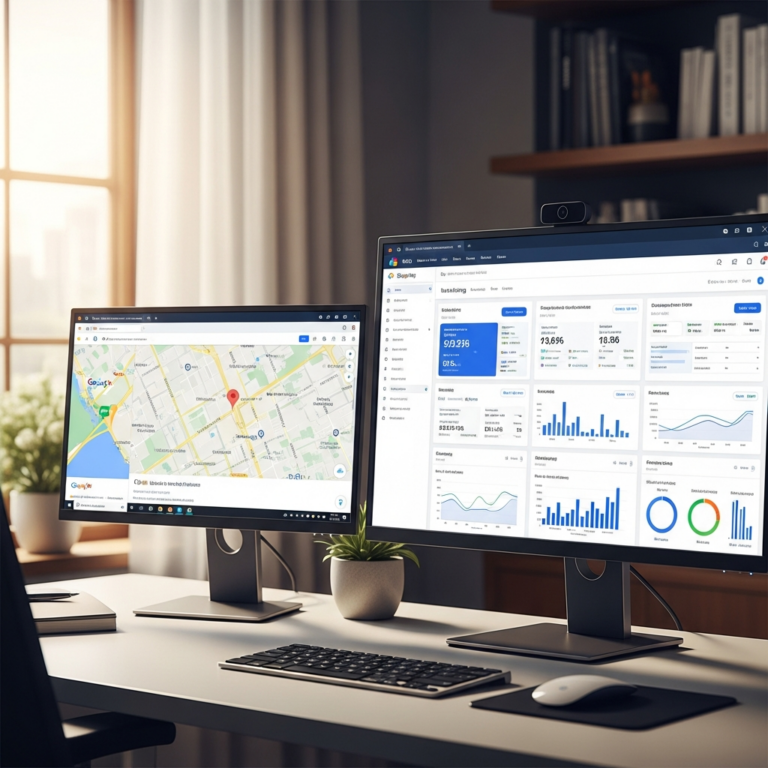
When someone searches for a local business on Google, the first thing they see is not your website. It is your Google Business Profile. Getting Google Business Profile optimization right is one of the most direct paths to more phone calls, more direction requests, and more walk-in customers for any small business operating in a specific geographic area.
Before you can optimize your profile, you need to make sure it is publicly accessible, which is why many business owners start by asking How Do I Make My Google Business Publicly Visible so they can confirm their listing is live and discoverable.
The businesses that show up in the Local Pack, the three-pack of map results at the top of a search page, are not there by accident. They have put consistent work into their profiles and their local presence. This guide walks you through exactly what that work looks like.
Why Your Google Business Profile Matters More Than Your Website for Local Searches
Most local searches end without a click to any website. Google delivers the phone number, hours, address, and reviews directly on the results page, and many searchers act on that information without ever visiting a site. That makes your profile the most customer-facing piece of digital real estate you own.
IT companies and MSPs face unique challenges in local search because their services are technical and their buyers are specific, which is why The Importance Of Google My Business For IT Businesses deserves dedicated attention beyond general local SEO advice.
Google’s algorithm for ranking local results weighs three core factors: relevance, distance, and prominence. You cannot control distance. You can control relevance and prominence through deliberate profile management. The SEO IT Guy works with local businesses across the country on exactly this work, and the profile-level changes consistently move the needle faster than most other tactics.
For managed IT services providers specifically, the same local SEO principles apply but require a specialized approach to MSP lead generation that only an insider like the Seo Guy can deliver.
Complete Every Section of Your Profile
A surprising number of business profiles are missing basic information. Incomplete profiles rank lower because Google has less data to match your listing to relevant searches.
Start with the foundation: make sure your business name, address, and phone number are exactly consistent with how they appear on your website and any other online directories. Even a small variation, such as “St.” versus “Street,” can dilute your local authority.
Beyond the basics, pay close attention to these often-skipped sections:
- Business description (750 characters, use your primary keywords naturally)
- Primary and secondary categories (your primary category is the single most important ranking factor you control)
- Business hours including special holiday hours
- Attributes relevant to your business type (women-owned, veteran-owned, outdoor seating, etc.)
- Website URL pointing to the most relevant page, not always the homepage
The “from the business” description field is not indexed for ranking in the same way that your website content is. Write it for the human reader, not for keyword density. Tell them what you do, who you serve, and what sets you apart in clear, plain language.
Use the Services and Products Sections to Match Search Intent
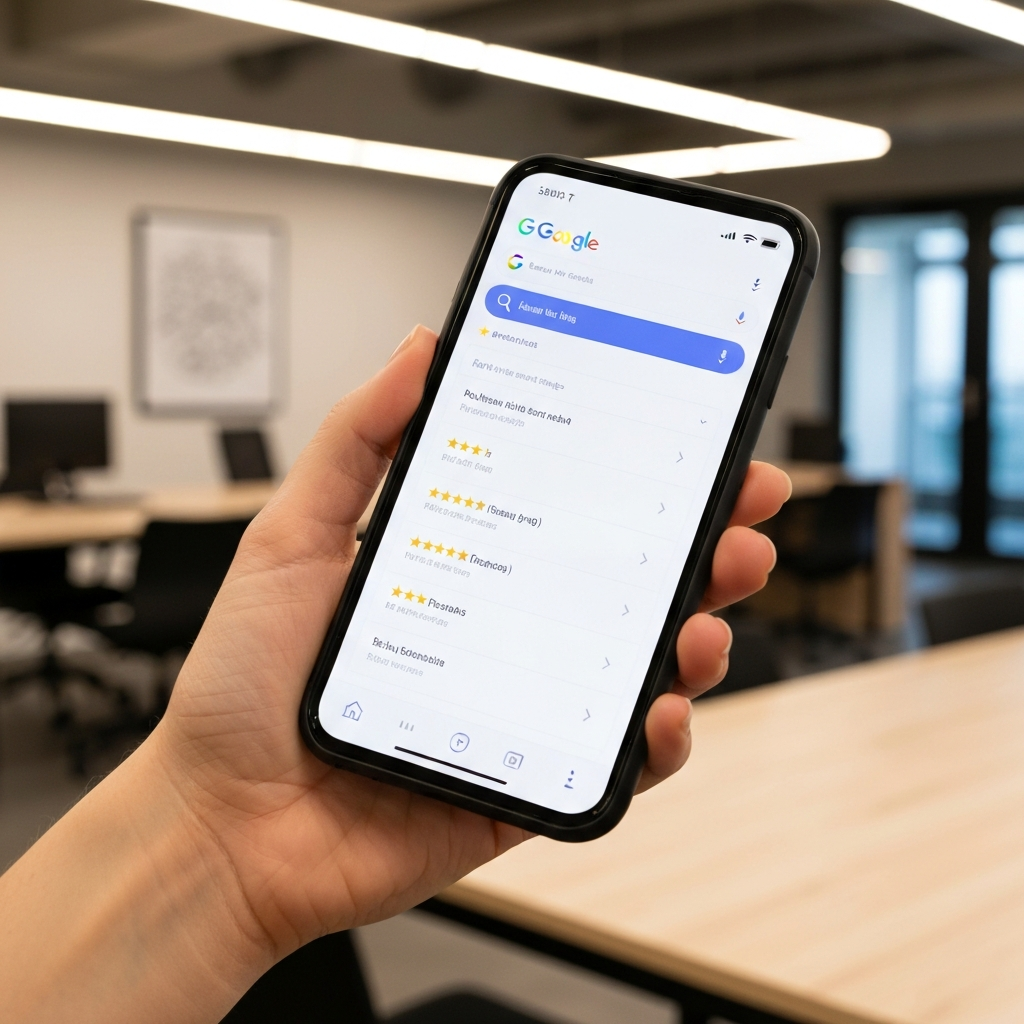
Google Business Profile gives you a dedicated “Services” section where you can list individual offerings with names and descriptions. Most businesses skip this or fill it in hastily. That is a significant missed opportunity.
Each service listing can include a name, description, and price range. When you name a service in a way that matches how customers search for it, you increase the chances that your profile appears for those specific queries. A plumber who lists “Water Heater Installation,” “Emergency Drain Clearing,” and “Sump Pump Repair” as separate services has a much stronger relevance signal than one who just lists “Plumbing Services.”
The Products section works similarly and is especially useful for retail businesses, contractors, and any business that sells identifiable items. Add your top offerings with photos and short descriptions. Think of it as a mini storefront built directly into Google Search.
Photos and Google Posts Both Drive Engagement
Profiles with active photo libraries get more clicks and more direction requests than those with few or outdated photos. Upload photos regularly across several categories: exterior shots, interior shots, team photos, and photos of your work or products.
Do not rely on customers to do all the photo work for you. While customer-submitted photos are valuable, they are uncontrolled. Make sure the first images a searcher sees are professional and show your business accurately. Google displays photos in an unpredictable order, so having a large library of quality images gives you more control over the overall impression.
Google Posts are a feature most local businesses underuse. You can publish updates, offers, events, and new products directly to your profile, and these appear in your Knowledge Panel. Posts expire after seven days for most types, which means consistent posting shows Google that your profile is actively managed. Active management is a positive signal.
A simple cadence works well: one post per week covering a current service, a recent customer win, a seasonal offer, or a piece of helpful advice. Keep it short, include a clear call to action, and add a photo to every post.
Reviews Are a Ranking Factor and a Conversion Factor
Your review count and average rating influence both where you rank and whether a searcher chooses you over a competitor. Google’s algorithm treats reviews as a form of social proof and a signal of prominence. A business with 80 reviews and a 4.7 average will almost always outrank a competitor with 12 reviews and a 4.9 average, even if the second business is technically higher rated.
Building your review count comes down to one thing: asking consistently. The best moment to ask is immediately after a positive customer interaction, before the moment fades. Text and email both work. The key is to make it easy by sending a direct link to your review form rather than asking customers to find it themselves.
Responding to reviews is equally important. Respond to every review, positive and negative, within 24 hours. For positive reviews, a short, genuine thank-you with the customer’s first name and a specific reference to what they mentioned goes a long way. For negative reviews, keep your response calm, acknowledge the issue, and offer to resolve it offline. Do not argue and do not paste in a generic response.
The SEO IT Guy builds review generation into every local SEO engagement because the compounding effect is real. A business that collects four or five new reviews per month will, within a year, have a profile that is substantially harder to displace from the Local Pack than one that treats reviews as an afterthought.
The Q&A Section Lets You Seed Your Own Questions
The Questions and Answers section on your profile is publicly visible, and anyone can submit a question or answer one. That includes you. Proactively seed this section with five to ten questions that your customers commonly ask, then answer them thoroughly.
Good questions to seed include pricing questions, service area questions, what-to-expect questions, and questions about your qualifications or certifications. Answering these removes friction from the decision-making process and shows up in your Knowledge Panel where searchers can see it without any extra clicks.
Monitor this section regularly. Third parties can answer your questions too, and those answers may not be accurate. If you see a wrong answer, submit the correct one. Google tends to surface the most upvoted answer, so make sure your answers are helpful and clearly written.
How long does Google Business Profile optimization take to show results?
Most businesses see measurable movement in local rankings within four to eight weeks of completing their profile and establishing a consistent activity cadence. Reviews and posting frequency compound over time, so the longer you maintain the work, the stronger the results become. Profiles that have been neglected for years may take longer to recover than a brand-new profile being built correctly from the start.
What is the most important category to select for my Google Business Profile?
Your primary category is the single most influential ranking factor you control directly on your profile. Choose the category that most specifically describes your main business type. If you are a residential electrician, select “Electrician” rather than “Contractor.” You can add secondary categories to capture related searches, but your primary category carries the most weight and should be as precise as possible.
Does having a website help my Google Business Profile ranking?
Yes. Your website functions as a corroborating signal for your profile. When your website content is consistent with your profile information and includes location-relevant content, it strengthens your local authority. A website with no local content, a mismatched address, or technical issues can undermine an otherwise strong profile. Your profile and your website work as a system, not independently.
How do I handle a Google Business Profile suspension?
Profile suspensions usually result from a policy violation such as a keyword-stuffed business name, a virtual office address, or multiple listings for the same location. First, identify the policy that was likely triggered. Then submit a reinstatement request through Google’s Business Profile support process with documentation proving your business legitimacy: utility bills, business licenses, or photos of your physical location. Avoid making changes to a suspended profile before requesting reinstatement, as this can reset the review timeline.
Can I optimize my Google Business Profile for multiple cities?
Your primary profile ranks strongest in the city where your verified address is located. For service-area businesses that operate across multiple cities, you can specify a service area radius in your profile settings. To rank well in specific surrounding cities, local SEO work needs to happen at the website level: city-specific service pages, local content, and citation building in those markets. The profile alone cannot carry multi-city ranking without supporting website infrastructure.
Consistent Google Business Profile optimization is not a one-time project. It is an ongoing practice that builds cumulative authority in your local market. If you want help building that foundation and maintaining it month over month, The SEO IT Guy offers local SEO services designed specifically for small and medium-sized businesses that want to rank where their customers are searching.

About the author
Steve Dempsey - Owner / Founder
Steve Dempsey is the owner and founder of The SEO IT Guy, an SEO agency for managed IT services providers that he started after more than 20 years running his own IT support company.