

The gap is not technical skill; it is a structured approach to search engine optimization that matches how business buyers actually look for IT partners.
This article breaks down the essential components of SEO for MSPs, from local keyword strategy to technical site health, so your managed services firm shows up when prospects search for help.
Key Takeaways
- Local keyword targeting with city and region modifiers captures buyer intent that broad national terms miss entirely.
- Dedicated service pages for managed IT, cybersecurity, and cloud solutions let you match specific search queries instead of forcing everything through one homepage.
- NAP consistency across your website, Google Business Profile, and directories is a foundational ranking signal that many MSPs overlook.
- Structured data markup helps search engines and AI assistants understand your services, hours, and service area without guessing.
Why MSPs Need a Different SEO Playbook Than General Contractors
Managed IT services buyers do not search the way homeowners look for plumbers. They use technical language, specify service types, and almost always include a geographic qualifier because they want a local partner who can visit on-site when needed.
An MSP SEO strategy has to account for this dual filter: the prospect is looking for both expertise and proximity. A generic IT services page optimized for national terms will lose every time to a competitor who has built location-aware content around specific service lines.
MSP SEO Readiness Checklist
- ✓Local keyword targeting with city or region modifiers: Add geo terms to every core service keyword phrase
- ✓Dedicated service page for each core offering: Create separate optimized pages for managed IT, cybersecurity, cloud, help desk
- ✓NAP consistency across all listings: Match name, address, phone, and hours on website, GBP, Bing Places, and directories
- ✓Complete Google Business Profile: Fill all fields: categories, services, photos, Q&A, and post regularly
- ✓Structured data markup: Implement LocalBusiness, Service, and FAQPage schema and validate with Google’s tool
- ✓Technical SEO baseline: Compress images, fix broken links, submit XML sitemap, enforce HTTPS, pass mobile Core Web Vitals
Use this checklist quarterly to audit your MSP website’s local search readiness.
How Local Keyword Targeting Connects You to Ready Buyers
Business owners searching for managed services typically append a city, metro, or region to their query. Terms like managed IT services Denver or cybersecurity firm Minneapolis signal immediate intent to evaluate providers in that market.
Building these geo-modified phrases into page titles, headers, and body copy helps search engines map your content to local search intent. The practice also protects you from competing against national SaaS platforms that cannot match your on-site capability.
Structuring Service Pages Around Specific Buyer Queries
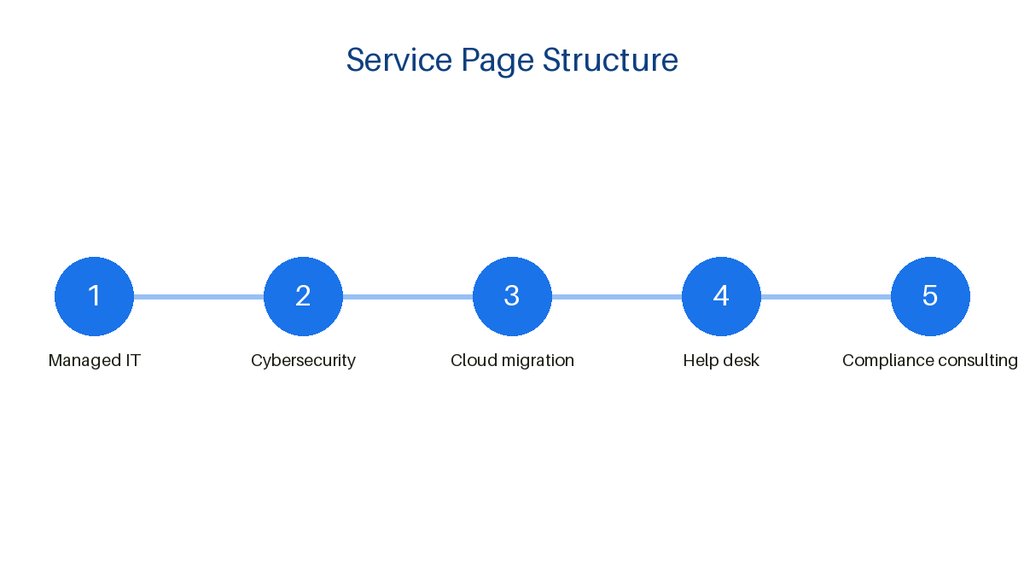
Every core service line deserves its own optimized landing page. Managed IT, cybersecurity, cloud migration, help desk, and compliance consulting each attract distinct searches from prospects at different stages of the buying cycle.
A single catch-all services page forces visitors to hunt for relevance and dilutes your topical authority in the eyes of search engines. Separate pages let you target precise keywords, answer specific questions, and guide visitors toward a consultation or assessment.
The Role of NAP Consistency and Google Business Profile in Local Rankings
Your business name, address, phone number, and hours must match exactly across your website, Google Business Profile, Bing Places, and every directory where you appear. Even small variations, like Suite versus Ste or different phone numbers for tracking, erode trust signals.
A complete Google Business Profile with accurate categories, detailed service descriptions, quality photos, and active posts signals freshness and legitimacy. This profile often serves as the first impression before a prospect ever reaches your website.
Technical SEO Foundations That Keep Your Site Crawlable and Fast
Search engines cannot rank what they cannot crawl. A clean XML sitemap submitted through Google Search Console, enforced HTTPS, resolved broken links, and compressed images form the baseline for visibility.
Mobile performance matters intensely for local search. Core Web Vitals scores on mobile devices directly influence whether your pages appear in map packs and local results, where most MSP prospects begin their search.

How The SEO IT Guy Approaches MSP Search Visibility
The SEO IT Guy was built by Steve Dempsey, an MSP owner who spent years frustrated with lead generation services that promised volume but delivered unqualified contacts. That experience shaped an agency that speaks the same technical language IT buyers use and understands which service pages actually convert visitors into consultations.
Clients work with a fixed monthly structure that covers strategy, execution, and reporting without requiring daily involvement from the MSP owner. Vanessa Gonzalez leads onboarding as Documentation Specialist, ensuring every campaign starts with clear goals, proper analytics setup, and a roadmap tailored to the specific market and competitive landscape.
Content Marketing Strategies That Position Your MSP as the Local Authority
IT decision makers rarely choose a provider based on a single search. They consume multiple pieces of content before ever filling out a contact form.
Your blog should address the specific technology pain points that businesses in your service area actually experience. Write about compliance requirements affecting local industries, not generic cybersecurity tips.
Case studies carry disproportionate weight in the MSP buying cycle. Document how you reduced downtime for a local manufacturing client or migrated a regional healthcare practice to the cloud.
Video content explaining your onboarding process or emergency response protocol builds trust faster than text alone. Embed these directly on relevant service pages rather than hiding them on a separate media page.
Webinars focused on region-specific regulations demonstrate deep local expertise. A recorded session on Texas data privacy laws, for example, signals relevance to prospects in that market.
Guest contributions to local business journals or chamber of commerce publications earn authoritative backlinks. These editorial links outperform directory listings in Google’s evaluation of local expertise.
Regular content updates signal to search engines that your site remains actively managed. Stale blogs from three years ago quietly erode both rankings and prospect confidence.

How Review Generation Tactics Strengthen Local Search Performance
Google’s local ranking algorithm weighs review velocity, diversity, and response patterns more heavily than most MSPs realize. A stagnant review profile suggests an inactive or unresponsive business.
The timing of review requests matters significantly. Ask immediately after resolving a critical outage or completing a successful migration, when client satisfaction peaks.
Review platforms extend beyond Google to industry-specific directories where prospects actively compare providers. Maintain presence on Clutch, G2, and local business associations where your buyers research.
Responding to negative reviews publicly demonstrates accountability without violating client confidentiality. A professional, solution-oriented reply often impresses prospective buyers more than the original complaint.
Review schema markup enables star ratings to appear directly in search results. These rich snippets increase click-through rates even when your absolute position remains unchanged.
Internal processes should assign review monitoring to a specific team member. Unanswered reviews accumulate quickly and compound the damage of each neglected response.
Automated review solicitation tools must preserve personalization. Generic templates trigger client fatigue and yield lower participation rates than customized outreach.
Link Building Approaches That Respect MSP Buyer Psychology
B2B technology buyers distrust obvious promotional tactics. Your link building must earn credibility through genuine utility rather than manipulation.
Sponsoring local charity technology drives or STEM education programs generates authentic community mentions. These organic citations carry more ranking value than purchased directory listings.
Original research on regional IT spending patterns or cybersecurity incident rates attracts natural citations from business publications. Journalists and bloggers reference unique data without solicitation.
Broken link building on resource pages of local business organizations offers mutual value. You help webmasters fix dead links while earning placement among trusted local resources.
Podcast appearances on regional business shows create conversational backlinks from show notes. These contextual links sit within relevant discussions rather than isolated directories.
Avoid link schemes promising rapid results through private blog networks or irrelevant guest posts. Google penalties for these practices can take years to recover from.
The highest-value links often come from relationships built over quarters, not days. Consistent participation in local business ecosystems gradually accumulates authoritative references.
Conversion Rate Optimization for MSP Websites Receiving Organic Traffic
Ranking first means little if visitors leave without engaging. Your pages must bridge the gap between search intent and sales conversation.
Service pages should lead with business outcomes, not technical specifications. Prospects search for ‘reduce downtime’ more often than they search for specific monitoring platforms.
Social proof placement matters more than quantity alone. Position testimonials adjacent to relevant service descriptions rather than consolidating them on a distant testimonials page.
Contact forms requesting excessive information create abandonment at the moment of highest intent. Name, email, company, and primary challenge suffice for initial qualification.
Live chat staffed by technically knowledgeable responders captures visitors who resist phone calls. Bot-only implementations frustrate prospects with complex or urgent needs.
Calendar scheduling embedded directly on service pages removes friction from the consultation request. Each additional click between interest and commitment loses qualified prospects.
Page speed impacts conversion independently of its ranking effects. A three-second delay on mobile can halve form completion rates even when visitors found you organically.

Frequently Asked Questions
What makes SEO for MSPs different from SEO for other B2B services?
MSP buyers use highly specific technical language and almost always include geographic modifiers in their searches. A strategy that ignores either element will miss the exact audience that needs local, hands-on IT support.
How many service pages should an MSP website have?
Start with a dedicated page for each core service line you actively sell and support. Most MSPs benefit from separate pages for managed IT, cybersecurity, cloud solutions, help desk, and any specialized compliance or consulting offerings.
Does posting on Google Business Profile actually improve rankings?
Regular activity on your Google Business Profile signals freshness and engagement, which correlates with stronger local visibility. The key is consistent, relevant updates rather than sporadic bursts of activity.
What technical issues hurt MSP websites most often?
Slow mobile load times, missing HTTPS, unoptimized images, and broken internal links are the most common culprits. These issues directly affect crawlability and user experience, both of which influence local search performance.
How long does it take to see results from an MSP SEO campaign?
Most MSPs begin seeing measurable improvements in local visibility within three to six months, assuming consistent execution. Competitive markets and newer domains may require additional time to build authority and earn prominent placement.
Should an MSP prioritize local SEO or national SEO if they serve multiple states?
Most MSPs benefit from prioritizing local SEO in their primary market while building location-specific pages for secondary service areas. National SEO demands substantially greater investment and rarely converts as efficiently for relationship-dependent IT services.
Establish dominance in one geographic cluster before expanding, using proven local frameworks as templates for new markets.